



Introduction
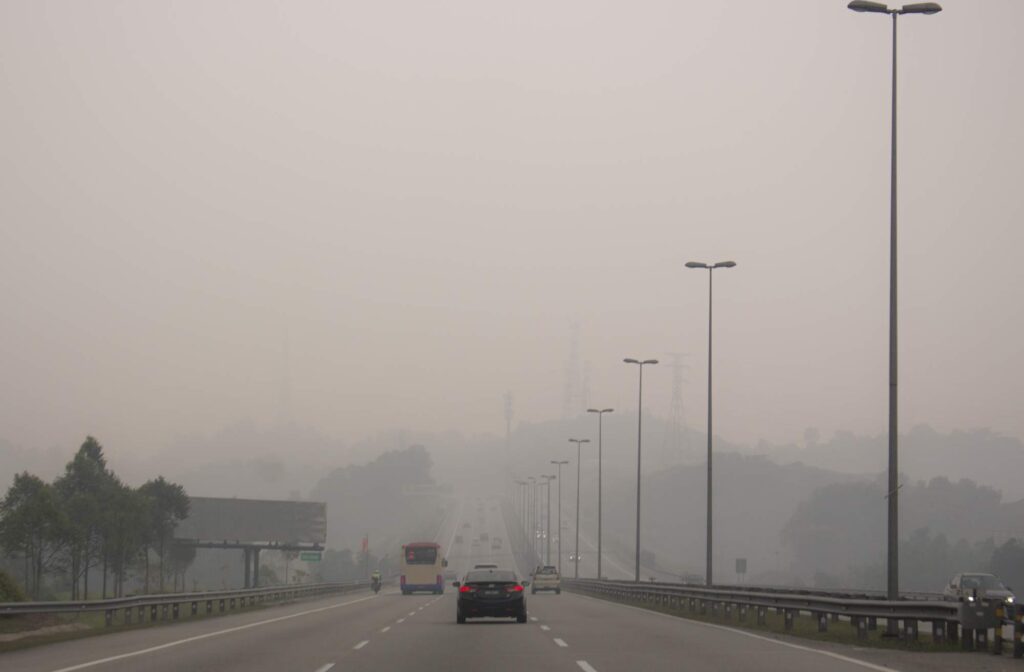
In early September 2026, Malaysia declared a state of emergency in Sarawak’s Serian district after the Air Pollutant Index (“API“) breached hazardous levels – what Al Jazeera called the region’s worst smoke crisis in a decade.[1] The Association of Southeast Asian Nations (ASEAN) Secretariat activated Alert Level 3.[2] The persistent smog forced the Government to relocate the National Day Prime Minister’s Address indoors.[3] Earlier, in late August, 29 areas nationwide had recorded unhealthy API readings in a single day,[4] and the Ministry of Health reported that asthma cases surged by 259% and upper respiratory tract infections by 124% within a single epidemiological week.[5]
The public health response has dominated headlines. However, there is another dimension to the haze crisis that has received far less attention – and it is the one that carries criminal liability.
For employers operating construction sites, quarries, mines, plantations and other outdoor workplaces, haze is not merely an environmental or public health event. It is an occupational safety and health issue. Under the Occupational Safety and Health Act 1994 (“OSHA“), the question is simpler and far more pointed:
- What are you doing about the risk to your workers?
- If the answer is “we issued N95 masks,” you may want to keep reading.
The Guidelines Nobody Reads Until it is Too Late
The Department of Occupational Safety and Health (“DOSH“) published its Guidelines for the Protection of Employees Against the Effects of Haze at Workplaces (“Haze Guidelines“) to provide employers with a structured framework for managing haze-related risks. It is concise and largely free of technical jargon, setting out in reasonably plain terms what employers should do at each API level.
Our experience advising on workplace safety incidents shows that many employers, including large, well-resourced ones, have never incorporated these guidelines into their operational risk management.
The Haze Guidelines are not subsidiary legislation: they have no force of law, create no offences, and non-compliance is not itself a statutory breach. They nevertheless matter. In prosecutions under OSHA – particularly sections 15, 18, 18A and 18B – courts and regulators may use them to assess what was reasonably available to guide an employer’s decisions. A prosecutor may put them before the court as evidence of what the employer should have done.
Treating the Haze Guidelines as optional is, in regulatory terms, a high-risk strategy.
What the Haze Guidelines Actually Require
The Haze Guidelines are structured around escalating API thresholds, with corresponding employer obligations at each level. The table below summarises the graduated framework.
API Level | Classification | Key Employer Obligations |
|---|---|---|
| 51-100 | Moderate | • Identify susceptible employees (heart or respiratory illness). • Identify outdoor work to be reduced during haze. • Determine criteria for stopping outdoor work. Ensure sufficient stock of N95 respirators. • Improve efficiency of air cleaning devices for indoor workplaces. • Implement haze communication system between employer and employees. Conduct respirator fit testing. |
| 101-200 | Unhealthy | • Minimise outdoor work involving strenuous physical activity. • Provide suitable respirators to susceptible employees working outdoors. • Deploy susceptible employees indoors if they experience difficulty. • Spray all construction sites with water regularly. |
| 201-300 | Very Unhealthy | • Avoid strenuous outdoor work altogether. • Deploy susceptible employees to indoor, non-strenuous work. • Provide suitable respirators to all employees performing outdoor work. • Stop earthworks and earth movements temporarily. |
| 301-400 | Hazardous | • Avoid strenuous outdoor work. • Provide suitable respirators to all outdoor workers. • Conduct risk assessment considering additional risk posed by poor visibility for lifting operations (tower and mobile cranes). • All vehicles to switch on headlights. |
| >400 | Very Hazardous | • Avoid outdoor work entirely. Conduct risk assessment on impact of haze on health of all employees, especially outdoor workers. • If risk of ill health cannot be mitigated, stop work activities. • Only emergency and essential services to continue – with suitable respiratory protection. • Await further instruction from National Committee on Disaster Management. |
For an employer that ignores the framework, the question at trial will not be whether the guidelines were binding, but why it chose not to follow them.
The API number should not become a simplistic “green light/red light” compliance matrix. DOSH’s thresholds are useful, but employers must assess the particular activity and conditions. An API of 95 does not mean the site is safe, and an API of 105 does not mean only the measures in the 101-200 row apply. Sections 15 and 18B require employers to assess and control the actual risk, which varies with the work and conditions.
The OSHA Framework – and Why it is Wider than Most Employers Think
The 2022 amendments to the OSHA (“2022 amendments“) changed the compliance landscape. Here is what employers need to understand.
Sections 18A and 18B require employers, principals and self-employed persons to conduct risk assessments and implement necessary controls. Section 15 imposes the broader duty to ensure, so far as practicable, the safety, health and welfare of employees at work. Breach of any of these duties is a criminal offence punishable by a fine of up to RM500,000, imprisonment of up to two years, or both.
A prosecutor does not need to choose between them – a failure to conduct a proper haze risk assessment under section 18B will often also amount to a breach of the general duty under section 15.
Section 18 requires employers to provide information, instruction, training and supervision necessary to ensure the safety and health of employees. In a haze context, workers must understand API thresholds, use respirators correctly, know when to escalate and when to stop work. Posting API readings on a notice board does not discharge the obligation.
Section 26A, introduced by the 2022 amendments, gives employees the statutory right to remove themselves from imminent danger if, after being informed, the employer fails to act. The term “imminent danger” means a serious risk of death or serious bodily injury from any workplace condition, activity, process or hazard. Employees exercising this right are protected against discrimination. In severe haze, workers may lawfully refuse to continue working; supervisors who are not trained to manage such refusals may expose the employer to a safety incident and an industrial relations dispute.
DOSH may order work to stop where haze poses an immediate danger and measures have not been taken. Non-compliance is a criminal offence.
An employer who has never incorporated the Haze Guidelines into its Hazard Identification Risk Assessment and Risk Control (“HIRARC“) is, in practical terms, operating without a defensible position.
So What Should an Employer Actually Do?
Not simply issue N95 masks and carry on.
An employer should, as a starting point:
- Review its existing HIRARC. Does it address haze-related risks at all? If so, does it reflect the graduated API thresholds in the Haze Guidelines, or does it treat haze as a single, undifferentiated event?
- Identify which activities need to be reduced, modified or suspended at different API levels. This is not a one-size-fits-all exercise. The risk profile of a worker pouring concrete in an open excavation differs from that of a crane operator lifting prefabricated panels at height.
- Review visibility-dependent activities. Haze does not just affect lungs – it affects sight lines. Lifting operations, mobile plant movements, blasting, work at height, vehicle operations and emergency response are all affected when visibility drops. The Haze Guidelines specifically contemplate risk assessments for tower and mobile crane operations when API exceeds 300; employers should not wait for that threshold to assess whether site operations are safe.
- Identify workers who may be particularly vulnerable. The Haze Guidelines specifically require identification of susceptible employees – those with heart or respiratory illness – and vulnerability may also extend to workers who are pregnant, older or exposed to sustained outdoor work over long hours.
- Establish clear escalation and stop-work criteria. This means specific, documented thresholds at which particular activities are reduced, modified or stopped. It means identifying who has the authority to make those decisions and ensuring those individuals understand their responsibilities.
- Ensure supervisors actually implement those controls on site. This is the gap between policy and practice that regulators look for – and that prosecutors exploit. A beautifully drafted haze standard operating procedure (“SOP“) that sits in a lever arch file in the site office is not a control. It is evidence of what the employer knew it should have been doing.
- Ensure respirator fit testing is conducted. The Haze Guidelines require it. Employers must ensure respirators fit each employee, provide training on correct use, and replace them when soiled, damaged or ineffective.
The Real Issue
The real issue is (i) whether your risk assessment reflects the conditions on the ground; (ii) whether your controls are proportionate to the actual risk; (iii) whether your HIRARC’s escalation thresholds correspond to the graduated framework in the Haze Guidelines; (iv) whether your supervisors know what to do and have the authority and support to act; and (v) whether, when conditions deteriorate, your people follow those controls.
Because when haze becomes a foreseeable workplace hazard – and in Malaysia, it has been foreseeable for decades – “we knew it was bad, but we carried on” is not much of a compliance strategy.
It is an admission.
Haze, Construction Contracts and Extensions of Time
There is a further dimension to haze that sits at the intersection of safety law and construction law – and it is one that contractors and project owners ignore at their peril.
When haze forces a reduction, modification or cessation of outdoor work, the contractor may be entitled to an extension of time (“EOT“) under the construction contract. Most standard forms used in Malaysia, including the Pertubuhan Akitek Malaysia (“PAM“) Contract 2018, Public Works Department (PWD) 203A and Construction Industry Development Board (CIDB) Standard Form of Contract for Building Works 2022, contain EOT provisions that cover force majeure events, inclement weather and compliance with governmental or regulatory directions.
Under the PAM form, force majeure covers circumstances beyond the contractor’s control, including natural disasters and governmental or regulatory action. A DOSH stop-work order – or a decision to cease work in compliance with the Haze Guidelines and the employer’s statutory duties under sections 15 and 18B of the OSHA – can constitute a relevant event for an EOT claim. Haze conditions exceeding normal seasonal expectations may also fall within the “exceptionally inclement weather” ground in several standard forms.
Entitlement depends on documentation. This means the contractor must show that haze caused the delay, the decision to reduce or stop work was proportionate, and notice was given within the contractual timeframe. Under the PAM form, written notice of an intention to claim an EOT must be given within 28 days of the relevant event commencing.
Daily records of API readings, site conditions, visibility assessments, risk-assessment updates, stop-work decisions and the reasons for them are critical. A contemporaneous log showing that API exceeded 200 on specified dates, that lifting operations were suspended after a poor-visibility risk assessment, and that the project team followed HIRARC escalation protocols supports a credible EOT claim.
Treat haze documentation the way you treat delay documentation. Record it daily. Record it contemporaneously. Record API readings from Air Pollutant Index Management Systems (APIMS), activities reduced, modified or stopped, and the decisions and decision-makers. Issue notices on time.
If haze causes a genuine delay to the works, failure to preserve the entitlement through timely notice and substantiation leaves the contractor bearing the time risk – even where the law required work to stop.
Postscript – Triggering the Right Provisions at the Right Time
Safety obligations and commercial consequences intersect, and an employer or contractor that knows when to trigger the right provisions will be in a materially stronger position than one that does not.
The penalties on the safety side are significant. Non-compliance with DOSH stop-work orders carries a fine of up to RM50,000 or imprisonment of up to five years, or both, plus RM500 per day. Section 52 of OSHA, as amended, extends personal liability to directors and officers where the offence was committed with their consent, connivance or neglect.
Commercially, failing to document haze-related delays may cost a contractor its EOT entitlement if it stops work for safety reasons but misses the contractual notice deadline. A principal that directs work to continue in breach of OSHA may face criminal prosecution and a negligence claim from an injured worker; the plaintiff’s solicitor will likely request the HIRARC and SOP first, particularly if they were not updated or followed.
The point is straightforward. Know what your safety obligations are. Know what your contractual mechanisms are. Know when to trigger them. Document everything. Because when the haze clears, the regulators, the auditors and the lawyers will still be reading your records.
Contribution Note:
This Legal Update is written by Partner Shannon Rajan.
[1] Associated Press, “Malaysia declares emergency in Sarawak town as haze reaches critical level”, 4 September 2026; and Al Jazeera, “Toxic haze from Indonesian forest fires chokes Malaysian Borneo”, 1 September 2026.
[2] Human Resources Online, “Malaysia haze worsens: 21 areas record unhealthy to hazardous air quality”, 31 August 2026.
[3] Malay Mail, “Haze continues choking Malaysia as 19 areas see ‘Unhealthy’ air quality”, 28 August 2026.
[4] Human Resources Online, “Haze in Malaysia: 29 areas record unhealthy air quality as haze situation worsens”, 25 August 2026.
[5] Borneo Post, “Haze and health: When is it too dangerous to carry on?”, 31 August 2026.
Disclaimer
Rajah & Tann Asia is a network of member firms with local legal practices in Cambodia, Indonesia, Lao PDR, Malaysia, Myanmar, the Philippines, Singapore, Thailand and Vietnam. Our Asian network also includes our regional office in China as well as regional desks focused on Brunei, Japan and South Asia. Member firms are independently constituted and regulated in accordance with relevant local requirements.
The contents of this publication are owned by Rajah & Tann Asia together with each of its member firms and are subject to all relevant protection (including but not limited to copyright protection) under the laws of each of the countries where the member firm operates and, through international treaties, other countries. No part of this publication may be reproduced, licensed, sold, published, transmitted, modified, adapted, publicly displayed, broadcast (including storage in any medium by electronic means whether or not transiently for any purpose save as permitted herein) without the prior written permission of Rajah & Tann Asia or its respective member firms.
Please note also that whilst the information in this publication is correct to the best of our knowledge and belief at the time of writing, it is only intended to provide a general guide to the subject matter and should not be treated as legal advice or a substitute for specific professional advice for any particular course of action as such information may not suit your specific business and operational requirements. You should seek legal advice for your specific situation. In addition, the information in this publication does not create any relationship, whether legally binding or otherwise. Rajah & Tann Asia and its member firms do not accept, and fully disclaim, responsibility for any loss or damage which may result from accessing or relying on the information in this publication.

