


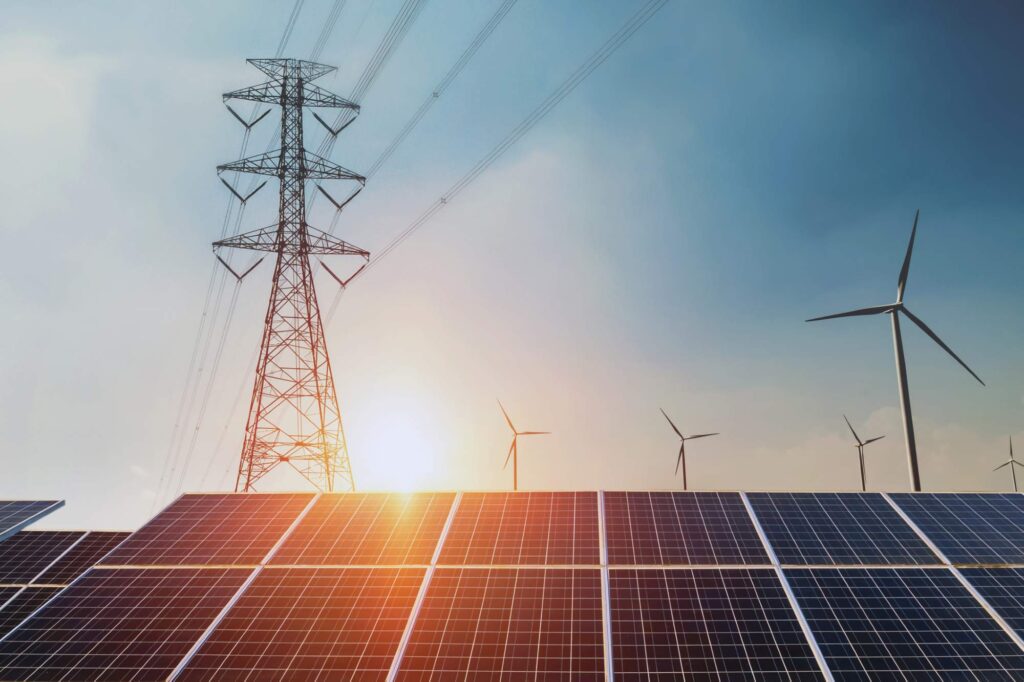
Vietnam’s Growing Energy Demand
Vietnam is transitioning from a coal‑based power system to a diversified mix that supports industrial growth and environmental sustainability. Rapid urbanisation and industrial expansion have driven electricity demand upwards, while international commitments on carbon neutrality necessitate a shift towards greener energy sources. In 2025-2030, the Government therefore envisions not only meeting rising demand but doing so through market‑oriented mechanisms and a greater share of renewable energy.
At the “Seminar on the Development of Viet Nam’s Power Sector 2024-2025” held on 26 November 2025 in Ha Noi, co-organised by the Electricity Authority of Viet Nam (“EAV“) under the Ministry of Industry and Trade (“MOIT“) and the Australian Embassy in Viet Nam, EAV presented the Government’s “Next-Step Implementation Plan” for the electricity sector. This plan sets out how Viet Nam will operationalise the new legal framework, accelerate investment, and guide the electricity market towards a more competitive, transparent and sustainable structure in the coming years.
Liberalising the Electricity Market
Eliminating Administrative Barriers
Future policy aims to eliminate administrative interference in production and trading activities, remove market‑access barriers, and use market‑based tools rather than administrative orders to balance supply and demand. This allows investors, generators and retailers to operate on a level playing field, which is essential to attract capital for new projects.
Developing a Competitive Electricity Market
Vietnam’s power sector will evolve from a state‑controlled system to a fully competitive electricity market in two stages:
- Wholesale competition (2026–2027): The existing pilot wholesale market will be expanded, allowing generators to compete to sell electricity to distribution companies and large consumers. The Government will review and update regulations on the competitive wholesale market, ensuring greater transparency and removing cross‑subsidies. Transmission remains a monopoly of the state to safeguard the stability of Vietnam’s electricity system.
- Retail competition (around 2030): Once wholesale competition stabilises, retail competition will be introduced. Retailers will be able to purchase electricity from the market and sell the same to end‑users at competitive tariffs. Households and businesses will have a choice of suppliers, while the Government ensures reliability and upholds consumer protection through state regulation.
Transparent Power Purchase Agreements (“PPAs”)
Bankable PPAs are crucial for investors. The plan calls for transparent, stable and long‑term PPAs that do not discriminate between public and private investors. Standardised PPAs will reduce transaction costs and ensure revenue certainty, thereby incentivising independent power producers and foreign investors.
Prioritising Renewable Energy and Just Transition
Increasing the Share of Renewable Energy
Vietnam aims to further increase the share of renewable electricity in its generation mix in line with Power Development Plan VIII, with a particular focus on new solar and wind projects. Over the coming period, these projects are expected to be developed and procured increasingly through competitive auctions and direct power purchase agreements (“DPPAs“) between generators and large consumers.
Cutting Red Tape
Projects often face delays due to overlapping approvals. The Government plans to review and streamline administrative procedures through new decrees, simplifying licensing and permitting. This is expected to accelerate renewable energy deployment and reduce transaction costs for investors.
National Energy Development Plan (2026-2032)
MOIT will develop a National Energy Development Plan for 2026-2032. This strategic document will propose mechanisms to accelerate energy transition and ensure resource adequacy in different demand scenarios.
Revising the Legal Framework
Electricity Law and Market Regulations
The 2024 Electricity Law (“Electricity Law“) will undergo a comprehensive review. An amended version of the Electricity Law is expected to be enacted in 2026, accommodating competitive market mechanisms, renewable integration, and emerging technologies. The revisions will also update tariff structures to remove cross‑subsidies and reflect cost‑based pricing.
Decree No. 57/2025/ND-CP of the Government on DPPAs (“Decree No. 57“) and Decree No. 58/2025/ND-CP of the Government on rooftop solar and distributed energy resources (“Decree No. 58“), both dated 3 March 2025, are also expected to be further refined and their scope expanded in the coming period. For further information on the two Decrees, please refer to our March 2025 Legal Update titled “Issuance of Decrees Implementing the 2024 Electricity Law“.
Strengthening Competition Safeguards
To avoid market manipulation and ensure equal opportunities, the Government will revise the roadmap for competitive electricity markets (including rules for generator participation, bidding procedures, and settlement). It will also review regulations on wholesale market participants, and devise a comprehensive decree to transition from the current pilot wholesale market to a full competitive market.
Ensuring Energy Security and System Flexibility
Reducing Cross‑Subsidies and Realistic Pricing
Future policies emphasise cost‑reflective tariffs. Future reforms aim to phase out cross-subsidies between customer classes, moving towards tariffs for each customer group that more closely reflect its actual cost of supply. This ensures financial sustainability for the electricity sector and encourages efficiency on the demand side.
Towards Integrated Resource Planning
The implementation plan also emphasises diversifying the generation mix – including coal, gas/LNG, hydropower, renewables and imported power – to strengthen supply security while progressively reducing emissions.
Key Steps in Implememting the Vision
- Streamlining regulations: Review and amend licensing procedures; refine Decree No. 57 and Decree No. 58; issue clear guidelines for renewable auctions and DPPAs.
- Drafting laws and policies: Prepare a new amended version of Electricity Law for the National Assembly; develop and issue a National Assembly Resolution on mechanisms and policies for national energy development for 2026-2030; publish a revised roadmap for competitive electricity markets.
- Launching the competitive wholesale market: Finalise rules, settlement procedures and market operations; open participation to independent generators and distribution companies; gradually reduce EVN’s purchasing monopoly.
- Preparing for retail competition: Enact distribution unbundling and create retail companies; establish consumer choice and protections; develop data and billing infrastructure.
- Continuous monitoring and adjustment: During implementation, regulators will monitor market performance, adjust rules to prevent abuse, and update planning to reflect changing demand and technology.
Concluding Words
Vietnam’s power sector is on the cusp of transformative changes. The policy roadmap outlined in the Next Step Implementation Plan aims to liberalise the market, prioritise renewable energy, streamline regulations, and ensure energy security. By embracing competitive mechanisms and revising its legal framework, Vietnam can attract investment, enhance supply reliability, and align its growth with global trends in decarbonisation. The success of this transition will depend on effective policy implementation, transparent governance, and collaboration between public authorities and private investors.
This Update was authored by Dr. Chau Huy Quang, Mr. Cao Dang Duy, and Dr. Le Hong Phuc (also a lecturer at Phenikaa University).
Disclaimer
Rajah & Tann Asia is a network of member firms with local legal practices in Cambodia, Indonesia, Lao PDR, Malaysia, Myanmar, the Philippines, Singapore, Thailand and Vietnam. Our Asian network also includes our regional office in China as well as regional desks focused on Brunei, Japan and South Asia. Member firms are independently constituted and regulated in accordance with relevant local requirements.
The contents of this publication are owned by Rajah & Tann Asia together with each of its member firms and are subject to all relevant protection (including but not limited to copyright protection) under the laws of each of the countries where the member firm operates and, through international treaties, other countries. No part of this publication may be reproduced, licensed, sold, published, transmitted, modified, adapted, publicly displayed, broadcast (including storage in any medium by electronic means whether or not transiently for any purpose save as permitted herein) without the prior written permission of Rajah & Tann Asia or its respective member firms.
Please note also that whilst the information in this publication is correct to the best of our knowledge and belief at the time of writing, it is only intended to provide a general guide to the subject matter and should not be treated as legal advice or a substitute for specific professional advice for any particular course of action as such information may not suit your specific business and operational requirements. You should seek legal advice for your specific situation. In addition, the information in this publication does not create any relationship, whether legally binding or otherwise. Rajah & Tann Asia and its member firms do not accept, and fully disclaim, responsibility for any loss or damage which may result from accessing or relying on the information in this publication.