


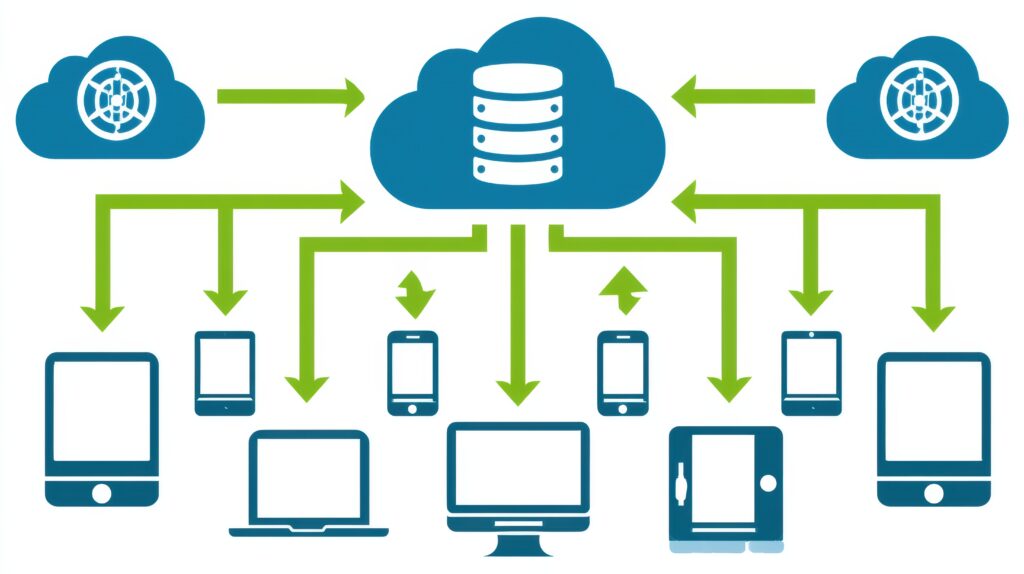
Federated Learning has emerged as a promising Privacy Enhancing Technology. It is a decentralised machine learning technique where a shared artificial intelligence (“AI“) model is trained across multiple separate devices or servers without exchanging any raw local data. Instead of moving data to a central cloud, the model goes to the data, trains locally, and sends only small model updates back to a central server.
To help organisations understand and adopt Federated Learning, the Personal Data Protection Commission (“PDPC“) has launched a Guide on Federated Learning (“Guide“). The Guide includes an adoption roadmap for businesses to assess whether Federated Learning is suitable for them, understand what is needed to adopt Federated Learning and how to design and configure a suitable Federated Learning solution.
The Guide covers the following topics on Federated Learning:
- What is Federated Learning, including categorisation by Federation Types and by Coordination Architectures.
- How is Federated Learning used, including use-case archetypes and case studies.
- Key implementation challenges, including business challenges, operational challenges, and algorithmic challenges.
- Federated Learning adoption roadmap, which covers three core stages: (i) assess suitability, which establishes strategic alignment; (ii) assess readiness, which focuses on operational planning; and (iii) design and configure, which delivers the technical execution.
- Risk management recommendations, including distributed governance and legal frameworks, federated data processing, collaboration and permission controls, and technical safeguards.
The Guide also provides a high-level overview of Federated Analytics, which is the practice of applying data science methods to the analysis of raw data stored locally on the participants’ side. It introduces Federated Analytics as a common precursor and complementary capability to Federated Learning deployments, including the types of analytics supported, relevant case studies, and risk management recommendations.
The Guide is intended for business, technology and data protection stakeholders who have a foundational awareness of Privacy Enhancing Technologies and are exploring whether Federated Learning is the right solution to address their specific data sharing and collaboration challenges.
Click on the following links for more information:
- Infocomm Media Development Authority (“IMDA“) Press Release titled “Privacy Enhancing Technologies: New Federated Learning Guide and Use Cases under IMDA’s PET Sandbox” (available on the IMDA website at www.imda.gov.sg)
- Guide on Federated Learning (available on the PDPC website at www.pdpc.gov.sg)
If you have any queries on the above, please reach out to our team set out on this page.
For regional Technology, Media & Telecommunications and Data & Digital Economy matters, please see Rajah & Tann Asia’s Data & Digital Economy Practice and Technology, Media & Telecommunications Practice, respectively, for more information.
Disclaimer
Rajah & Tann Asia is a network of member firms with local legal practices in Cambodia, Indonesia, Lao PDR, Malaysia, Myanmar, the Philippines, Singapore, Thailand and Vietnam. Our Asian network also includes our regional office in China as well as regional desks focused on Brunei, Japan and South Asia. Member firms are independently constituted and regulated in accordance with relevant local requirements.
The contents of this publication are owned by Rajah & Tann Asia together with each of its member firms and are subject to all relevant protection (including but not limited to copyright protection) under the laws of each of the countries where the member firm operates and, through international treaties, other countries. No part of this publication may be reproduced, licensed, sold, published, transmitted, modified, adapted, publicly displayed, broadcast (including storage in any medium by electronic means whether or not transiently for any purpose save as permitted herein) without the prior written permission of Rajah & Tann Asia or its respective member firms.
Please note also that whilst the information in this publication is correct to the best of our knowledge and belief at the time of writing, it is only intended to provide a general guide to the subject matter and should not be treated as legal advice or a substitute for specific professional advice for any particular course of action as such information may not suit your specific business and operational requirements. You should seek legal advice for your specific situation. In addition, the information in this publication does not create any relationship, whether legally binding or otherwise. Rajah & Tann Asia and its member firms do not accept, and fully disclaim, responsibility for any loss or damage which may result from accessing or relying on the information in this publication.